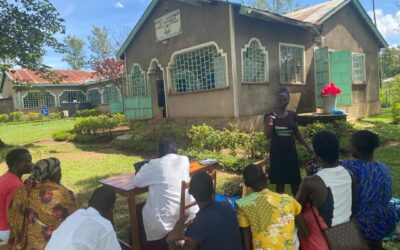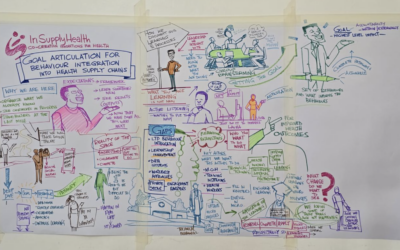
Seven fourth-year pharmacy students from Muhimbili University of Health and Allied Sciences (MUHAS) gained first-hand experience of health supply chain work during an eight-week field attachment at inSupply Health Tanzania.
From 8 June to 31 July 2026, the attachment gave the students an opportunity to move beyond classroom learning and see how pharmacy knowledge is applied across public health programmes, from data and commodity management to stakeholder engagement and health information systems.
The attachment was implemented through the Workforce Development in Public Health Supply Chains project, funded by the Gates Foundation, and forms part of efforts to strengthen the health supply chain workforce in Tanzania.
inSupply Health and MUHAS first assessed the students’ existing knowledge and learning needs. The findings were used to develop a programme combining self-paced Health Supply Chain Micromodules, virtual sessions, face-to-face learning and workplace shadowing.
The students then rotated across different areas of inSupply Health’s work, with each assigned to a different mentor every week.
The rotations exposed them to project implementation, data use, stakeholder engagement, health information systems, learning activities and documentation. They also saw how pharmacy concepts such as stock monitoring, storage, expiry management, rational medicine use and cold chain fit into wider health system operations.
For some students, the exposure prompted a rethink of their career plans.
“This field attachment at inSupply Health shifted my career focus from traditional clinical pharmacy toward global health logistics and consultancy.”
— Anonymous student
Students also reported strengthening practical skills in inventory management, problem-solving, data-informed decision-making, communication and teamwork.
For Nathan Mengo, the attachment highlighted opportunities within health supply chain work that he had not previously considered.
“The attachment opened my mind to the importance of supply chain expertise in the health system. It made me aware of career-development opportunities and helped me understand how projects are implemented.”
— Nathan Mengo
The programme ended with a learning-experience sharing meeting attended by the students, MUHAS supervisors and inSupply Health staff. Students presented reflections from their eight-week experience, while the teams reviewed the programme and gathered feedback to inform future cohorts.
The seven students were subsequently recognized for completing the attachment.
The experience comes as demand grows for professionals who can connect pharmaceutical knowledge with the systems that support the availability and effective use of health commodities.
For inSupply Health and MUHAS, the attachment provides a practical model for exposing pharmacy students to health supply chain careers before they enter the workforce, while strengthening the link between university training and public health practice.
The two institutions will use lessons from the first cohort to inform future student attachments and continue building opportunities for pharmacy students to gain practical experience in health supply chain management.