
Introduction
Reliable access to essential health commodities depends not only on having adequate supplies but also on health facilities’ ability to use high-quality data to make informed supply chain decisions. Poor data quality and ordering practices can contribute to overstocking, accumulation of on-demand commodities, unnecessary expenditure, and financial pressure on health facilities.
To address these challenges, inSupply Health, in collaboration with the Ministry of Health (MOH), Prime Minister’s Office- Regional Administration and Local Government (PMO-RALG), Regional and Tanga City Council teams, supported ten (10) health facilities in Tanga City Council to implement the facility-level IMPACT approach from July 2024 to June 2026. The initiative focused on strengthening the capacity of health facility teams to routinely review and use their supply chain data to identify performance gaps, develop appropriate actions, and track progress.
The implementation focused on improving key supply chain performance indicators, including the availability of health commodities, reducing overstocking and on-demand ordering, improving supply chain data quality, and ordering commodities more efficiently. As implementation progressed, an important additional benefit emerged: improved ordering practices contributed to lower order volumes and reduced commodity expenditure, which was subsequently associated with a reduction in outstanding commodity debt owed by health facilities to the Medical Stores Department (MSD).
Methodology: Turning Supply Chain Data into Action
The facility-level IMPACT approach was implemented in ten health facilities in Tanga City Council (Ngamiani Health Center, Mikanjuni Health Center, Tanga City Hospital, Duga Health Center, Makorora Health Center, Mafuriko Health Center, Pongwe Health Center, Mwakidila Health Center, Kisosora Dispensary, and Mwanzange Dispensary) to strengthen routine use of supply chain data for decision-making and improve overall commodity management. The approach placed health facility teams at the center of identifying supply chain challenges, developing solutions, and monitoring progress.
Bimonthly Facility IMPACT Meetings
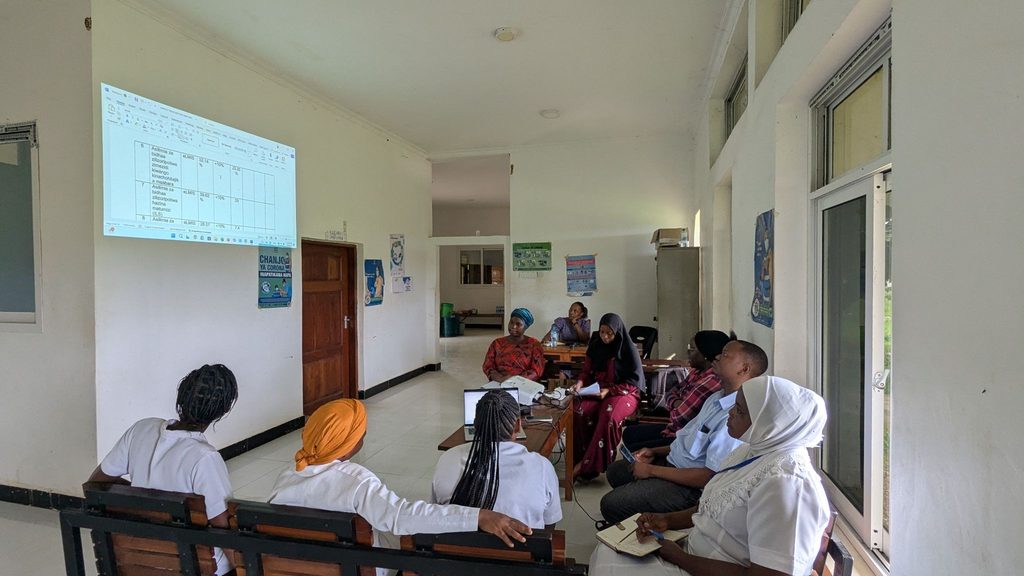
A key component of the implementation was the establishment and strengthening of bi-montly facility IMPACT meetings. During these meetings, facility teams reviewed their supply chain performance using routinely available data and discussed progress against key indicators.
The teams reviewed indicators related to commodity availability, stockouts, overstock, on-demand commodities, ordering practices, and supply chain data quality. This enabled facility staff to identify performance gaps, understand the underlying causes of identified challenges, and determine areas requiring immediate attention.
Importantly, the meetings went beyond reviewing performance. For each identified challenge, teams developed specific action plans, assigned responsibilities to relevant staff, and agreed on implementation timelines. Progress on previously agreed actions was reviewed during subsequent meetings, creating a continuous cycle of data review, problem identification and resolution, action planning, implementation, and performance monitoring.
Strengthening Data Quality and Use
Improving the quality of supply chain data was another important component of the implementation. Facility teams were supported to review the completeness, accuracy, and consistency of logistics data used for commodity management and reporting. Data Quality Assessments were conducted to identify gaps and provide targeted feedback to facility staff. Improved data quality enabled teams to have greater confidence in the information used during IMPACT meetings. This strengthened their ability to make informed decisions on stock management, commodity requirements, and ordering.
Improving Commodity Ordering Practices
Particular attention was given to strengthening commodity ordering practices. Facility teams routinely reviewed available stock, consumption trends, stock status, previous orders, and actual commodity requirements before preparing new orders. Through these reviews, facilities were able to identify commodities that were already overstocked or had little or no demand and avoid unnecessary reordering. This helped align orders more closely with actual consumption and facility needs, reducing excess stock while maintaining adequate availability of commodities.
As ordering became increasingly informed by quality data and actual demand, facilities were able to reduce unnecessary order volumes and make more efficient use of the financial resources available for health commodities.
Mentorship and Supportive Supervision
Facility teams also received regular mentorship and supportive supervision from an oversight team comprising representatives from the Ministry of Health (MOH), Regional Health Management Team (RHMT), and Council Health Management Team (CHMT). During supportive supervision visits, the oversight team reviewed facility performance, assessed implementation of agreed action plans, discussed persistent supply chain challenges, and provided practical guidance to facility teams. The visits also provided an opportunity to reinforce good practices and support facilities in addressing challenges that could not be resolved at facility level.
The involvement of MOH, RHMT, and CHMT strengthened accountability and created an important link between facility-level implementation and the wider health system. It also promoted government ownership of the approach and provided opportunities for lessons from the facilities to inform broader supply chain improvement efforts.
Overall, the implementation created a continuous improvement cycle in which facility teams periodically reviewed their data, identified challenges, developed and implemented corrective actions, and received mentorship and supportive supervision from the oversight team. This combination of routine data use, local action planning, and supportive oversight was central to the improvements observed in supply chain performance and ordering efficiency.
Results: Better Data and Financial Efficiency
Reduced Commodities Order Volume
Implementation of the IMPACT approach resulted in improvements across several supply chain performance areas. Health facilities demonstrated better quality of logistics data, improved commodity availability, reduced levels of on-demand commodities, and improved ordering practices.
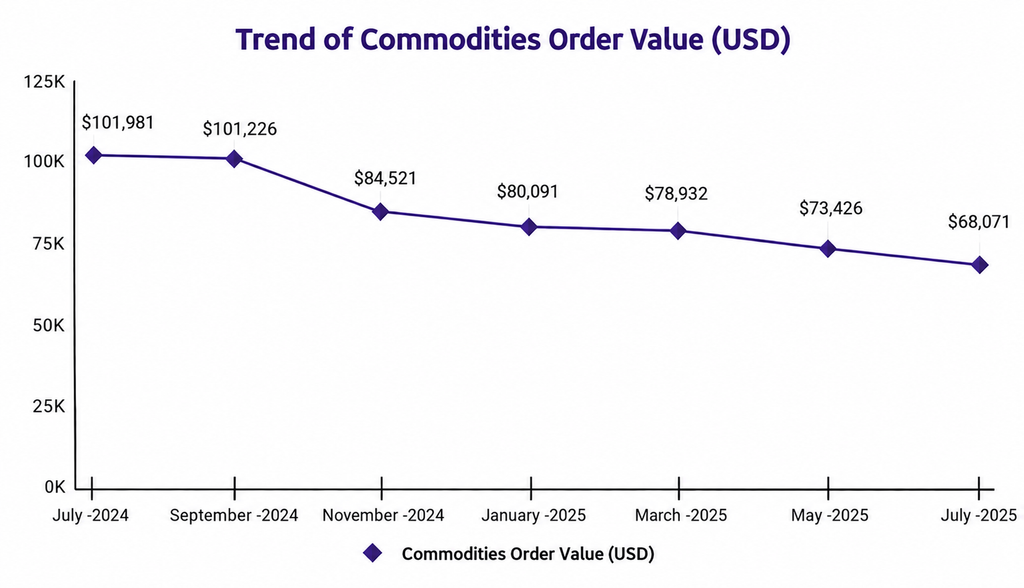
Beyond these operational improvements, the implementation demonstrated an important link between data quality, ordering decisions, and financial performance. As facility teams gained better visibility of their stock and consumption patterns, their orders increasingly reflected actual commodity requirements. This reduced unnecessary ordering and consequently lowered the overall value of commodities ordered from 101,981USD in July 2024 to 68,070USD July 2025 which is equal to a reduction of 33%.
Commodities Debt Reduction
The financial benefit became visible in the facilities’ outstanding commodity debt with MSD. During the implementation period, the debt was reduced from approximately 251,969USD to 165,827USD from July 2024 to July 2025 representing a reduction of 34%. While several factors can influence facility debt, the observed reduction alongside improvements in ordering practices provides an important indication of how better supply chain decisions can contribute to improved financial management.
This experience demonstrates that improving supply chain performance goes beyond ensuring that medicines are available. Better data enables better decisions; better decisions lead to smarter orders; and smarter orders can reduce unnecessary expenditure while protecting commodity availability.
Conclusion
The experience of the ten health facilities in Tanga City Council demonstrates the value of bringing data-driven supply chain management closer to the point where commodities are managed and services are delivered. Through the IMPACT approach, facility teams have strengthened their ability to understand their own performance, identify problems, and take corrective action.
Importantly, the results show how supply chain improvements can translate into financial benefits. By improving data quality and using stock and consumption information to guide ordering, facilities can minimize unnecessary purchases, reduce the accumulation of excess and on-demand stock, and make better use of available financial resources. The Tanga experience, therefore, provides an important example of how facility-level data use can connect commodity availability, inventory efficiency, and financial sustainability within the health system.
Recommendations and the Way Forward
The gains achieved in Tanga City Council should be sustained by continued routine IMPACT meetings, monitoring of supply chain and financial indicators, and ongoing mentorship of facility teams. Particular attention should be given to maintaining high-quality logistics data and ensuring that commodity orders remain informed by consumption, stock status, and actual facility needs.
There is also an opportunity to strengthen routine monitoring of the relationship between ordering efficiency, commodity expenditure, and MSD debt. Documenting these indicators over time will provide stronger evidence of the financial benefits associated with improved supply chain management.
Finally, lessons from the ten supported facilities can inform expansion of the facility-level IMPACT approach to additional health facilities. Strengthening frontline health workers’ ability to use their own data for decision-making can contribute to a health supply chain that is not only more responsive and reliable but also more financially efficient and sustainable.