On 3 September 2026, more than 300 stakeholders,52 participating in person and more than 250 joining virtually, came together in Nairobi for the Market Test Learning and Close-out Summit.
At the heart of the conversation was a deceptively simple question:
What would it take for pharmacies to become a stronger, more integrated part of Kenya’s health system?
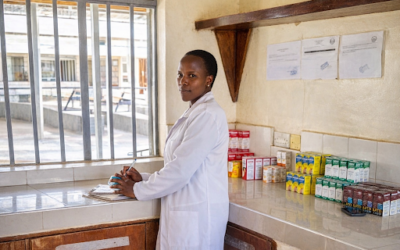
Kenya has more than 8,000 registered pharmacies, many located close to where people live, work and study. Their proximity, convenience and familiarity create an important opportunity to expand access to family planning (FP) and other primary health care services.
Over five years, the Strengthening the Pharmacy Channel for Provision of Contraceptives in Kenya (Market Test) explored what happens when this existing network is equipped with the skills, products, systems and partnerships needed to provide quality FP services.
The experience is encouraging—but it also offers an important lesson:
Training pharmacies is only the beginning. Sustainable scale depends on the health system around them.
From testing an idea to building a pathway for scale
Between 2021 and 2026, the Market Test worked across the foundations needed to strengthen pharmacy-based FP.
Provider capability: 650 providers were trained across 12 counties; 490 were accredited, and 40 were trained as trainers of trainers. A hybrid training model also demonstrated how training costs could be substantially reduced while maintaining a pathway to competency from KES 120,000 down to KES 30,000
Policy and standards: The project contributed to a stronger enabling environment, including the development and validation of pharmacy FP training approaches and integration of FP content into pre-service pharmacy education.
Commodity access: Engagement with 42 distributors helped strengthen the connection between pharmacies and the supply chain.
Demand generation: Through the Jipende Jipange brand, human-centred design, community engagement, and digital approaches, the project tested ways to generate awareness and demand for pharmacy-based FP.
Evidence and systems: Research, policy briefs, professional association engagement and collaboration with government-generated evidence to inform the next phase.
The results demonstrate the channel’s potential. Between 2022 and 2026, pharmacies involved in implementation and scale-up phases served 390,474 FP clients. In 2025, 180 scale-up pharmacies reported serving an average of 16,768 clients per month, with 60% of clients being new FP users.
These figures point to an important possibility: pharmacies can help extend FP access to people who may not be reached through traditional channels.
Five years of implementation: what did we learn?
The most valuable lessons from the Market Test are not only about reach. They are about what enables sustainable access.
Trust and convenience are part of quality: For services where privacy, confidentiality and comfort matter, the client experience matters as much as product availability. Pharmacies can offer proximity and familiarity, but these advantages need to be supported by appropriate training, quality standards and client-centred care.
The pharmacy cannot operate in isolation: A trained provider cannot deliver a service without commodities. A pharmacy cannot contribute meaningfully to the health system if its data is invisible. A client cannot move easily between private and public services without functioning referral pathways. The lesson is clear: strengthening the pharmacy channel means strengthening the ecosystem around it.
Data systems must work for providers too: Reporting was significantly stronger where pharmacies received direct mentorship and practical reporting support. As that support reduced, reporting declined.This highlights a broader lesson: digital reporting should not simply add another compliance requirement. It should make reporting easier, reduce duplication and provide value to providers while feeding into government systems.
Sustainability requires viable commodity economics: Demand alone does not guarantee sustained access. Product availability, margins, stocking decisions and supply continuity influence whether pharmacies can consistently offer contraceptive services. Future approaches, therefore, need to look beyond provider training towards market-shaping, distributor engagement, financing, and sustainable stocking models.
The opportunity extends beyond contraception: The summit also raised a broader question: What role can appropriately trained and regulated pharmacies play in primary health care and self-care? Potential areas discussed included STI, HIV and TB testing, cervical cancer screening and other vital health checks.
This should not mean expanding services without safeguards. Rather, it calls for a deliberate approach to defining what pharmacies can safely provide, how they connect to the wider health system, and when clients should be referred elsewhere.
From “pharmacy as an outlet” to “pharmacy as a partner”
Perhaps the strongest message from the summit was the need to shift from viewing pharmacies as isolated retail outlets to seeing them as connected contributors to the health system.
That means stronger links between pharmacies, Primary Care Networks, community health promoters, public facilities, professional associations, regulators, distributors and health information systems.
It also means bi-directional referral.
Pharmacies should be able to refer clients to public facilities when needs exceed their scope. In contrast, facilities and community-based actors should be able to refer clients to trained pharmacies when pharmacy-based services are appropriate.
The goal is not public versus private. It is a more connected system that gives clients appropriate choices about where and how they access care.
The way forward: turning learning into system change
The Market Test has generated evidence about what is possible. The next challenge is to create the conditions that allow those gains to be sustained and scaled.
The Optimising the Pharmacy Channel (OPC) initiative is taking this learning forward, with a focus on six interconnected priorities:
- Workforce: Expand and sustain a competent pharmacy provider network while strengthening pre-service education.
- Policy and regulation: Support policy and regulatory changes that enable appropriate pharmacy participation in primary health care and Primary Care Networks.
- Commodities: Improve availability, affordability and sustainable stocking of contraceptive products.
- Demand and referrals: Strengthen client awareness, engagement and two-way referral between pharmacies and public facilities.
- Data and evidence: Simplify digital reporting, strengthen integration with government systems and continue generating evidence on what works.
- Financing: Explore sustainable financing mechanisms, including coverage of comprehensive FP services through SHA and private insurance, as well as sustainable approaches to provider development.
Together, these priorities represent an important shift.
The question is no longer simply whether pharmacies can provide family planning. The question is what conditions need to be in place for them to do so sustainably, safely and at scale.
From learning to action
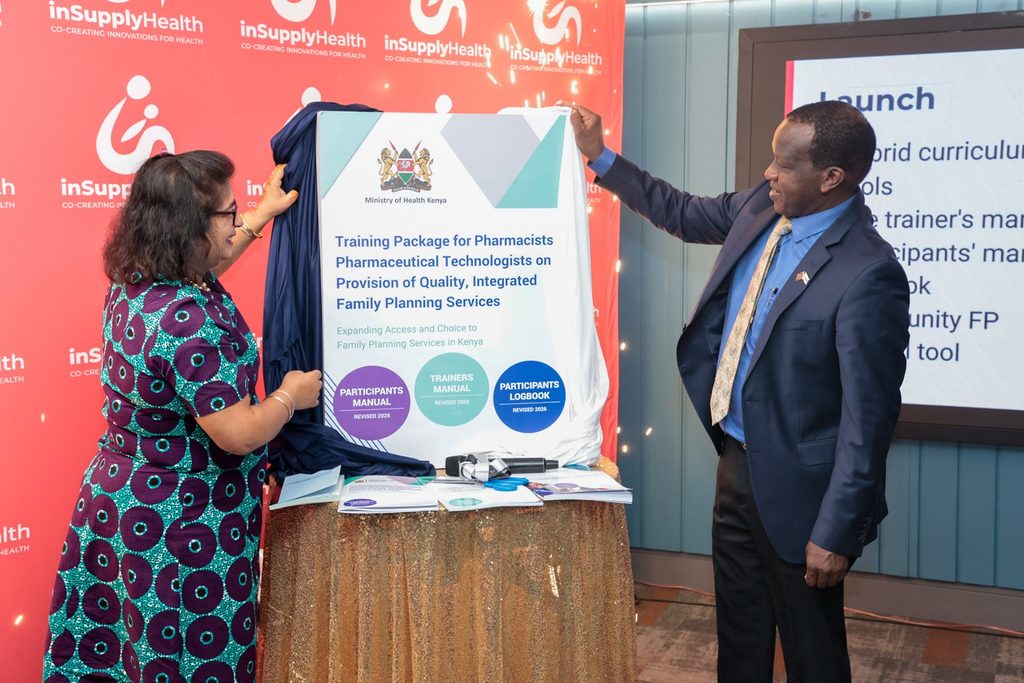
The launch of the Hybrid Curriculum for Family Planning in Pharmacies at the summit, by Dr Edward Serem, Head of the Division of Reproductive, Maternal, Newborn, Child and Adolescent Health at the Ministry of Health, marked an important step in institutionalising learning from the Market Test.
But the next chapter will require more than a curriculum.
It will require continued collaboration across government, counties, regulators, professional associations, private-sector actors, funders, providers and communities.
It will require investment in the systems around the pharmacy—not just the pharmacy itself.
And it will require continued learning: institutionalising what works, addressing what does not, and adapting as the evidence evolves.
Kenya has an opportunity to move from a model in which pharmacies are primarily viewed as access points to one in which appropriately trained and regulated pharmacies are recognised as connected partners in primary health care, self-care, and reproductive health.
The evidence is growing. The foundations are being built.
Now is the time to turn learning into action.
Key resources from the event:
- Incase you missed the event- watch the live link here
- Event presentation and key insights
- Select Media features:
- Science Africa:https://news.scienceafrica.co.ke/jipende-jipange-bringing-contraceptive-care-closer/
- TV47: https://www.youtube.com/watch?v=ts6U2K5bbdI
- The East Africa Journal:https://eastafricajournal.co.ke/2026/09/03/insupply-health-pharmacies-can-help-expand-family-planning-access-across-kenya/
- Africa Times: https://africatimesnetwork.co.ke/insupply-health-pushes-pharmacies-to-expand-family-planning-services-across-kenya/
- Kenya Daily News:https://kenya14daily.blogspot.com/2026/09/kenya-moves-to-strengthen-pharmacy.html
- Kenya Broadcasting Corporation (KBC):https://www.youtube.com/watch?v=MADjLOkqaVA
Join the movement!
A single organisation or project will not shape the future of pharmacy-based health care. It will be shaped by how the health system uses the evidence and learning generated through implementation.
The opportunity now is to move from testing the model to strengthening the systems that can make it sustainable, and to see how you can contribute to this call to action led by the Ministry of Health.