Background
Counties determine their Health Products and Technologies (HPT) requirements through annual quantification exercises that translate community health needs into financial needs. When local health budgets fall short of this quantified need, counties face a critical prioritization challenge: deciding which life-saving commodities to procure with limited available resources. In Isiolo County, despite continuous budget growth over the past three years, with the HPT budget allocation reaching 76% of the quantified need, a persistent 24% funding gap remains. The county lacks alternative revenue streams, such as Facility Improvement Funds (FIF) or active Social Health Authority (SHA) reimbursements, to supplement these allocations. This funding shortfall is compounded by a current budget execution rate of 56% (leaving 44% unexecuted), pending bills, and procurement challenges where most facilities lack a pre-qualified supplier base, creating a vital need for data-driven prioritization mechanisms to improve supply chain efficiency.

Intervention
To address these challenges, Isiolo County implemented a comprehensive three-pronged intervention focusing on evidence-based budget advocacy, transparent resource allocation, and facility-level capacity building:
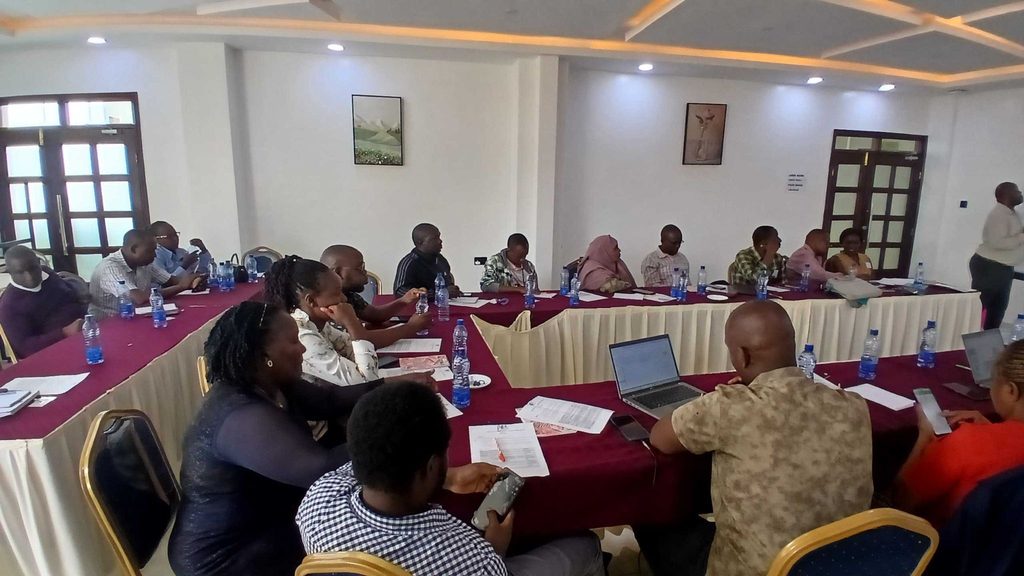
IMPACTT Approach Review Meetings: Led by the County Health Products and Technologies Unit (HPTU), multidisciplinary quarterly review meetings were established to systematically review supply chain data, identify operational bottlenecks, and connect them directly to the HPT funding gap. These reviews generated evidence-based advocacy packages targeting county executive leadership, demonstrating how budget shortfalls impact commodity availability and supporting requests for increased health financing.
“We would like to deliver for the people of Isiolo, and that is why the HPT Management quarterly review is critical. The county is working towards enhancing commodity security and promoting accountability.” — Dr. Mohamed Guyo, Chief Officer Health

Strategic Resource Management Tool (SMArT): Recognizing that available budget allocations remain insufficient to cover full quantified needs, in partnership with inSupply Health the county adopted the SMArT tool. To address prioritization, SMArT first assess whether your allocated budget covers facility requirements using stock on hand and funding data. Next, the tool removes items with sufficient stock from your forecasted needs. Then, it removes low-priority items by starting with the least essential and lowest-value categories based on VEN and ABC classifications. For the remaining items, quantities are retained proportionally according to priority. Finally, you review and validate the prioritized lists through sub-county and county oversight to ensure alignment with available resources before procurement.
Model Facilities Peer-Learning Network: To ensure effective inventory management at the point of care, high-performing facilities demonstrating exemplary stockkeeping such as Kobesa Health Centre and Garbatulla Sub-County Hospital were designated as peer-learning hubs. These model facilities provided practical mentorship to struggling locations, improving standard inventory documentation and stock visibility across the county.
Results
The implementation of the SMArT tool and data-driven review processes delivered clear, measurable results across Isiolo County’s supply chain. Directly attributable to SMArT’s algorithmic allocation, the county transitioned from manual, ad-hoc order placements to generating equitable, consolidated quarterly orders that maximize budget utility. High-level advocacy packages from IMPACTT reviews successfully persuaded executive leadership to gazette unlisted facilities like Green house and Lenguruma dispensaries, unlocking future health financing options. Peer mentorship from model facilities led to concrete facility-level improvements, including standardized bin card updating and organized commodity storage.
Challenges
Despite these advancements in equitable allocation and order consolidation, key structural challenges remain unresolved. Notably, 64% of primary healthcare facilities still lack necessary KMPDC licensing to contract with SHA and lodge claims, leaving potential supplementary revenue untapped despite improved budget allocation efficiency. Staffing constraints continue to cause periodic gaps in facility-level inventory organization and delayed bin card updates in selected departments, demonstrating that technical tools must be continually paired with persistent operational support.
Lessons Learned
- Algorithmic Resource Prioritization: Deploying transparent, workload-weighted allocation tools like SMArT allows health systems to equitably distribute constrained budgets and foster trust across administrative units when available resources cannot meet full quantified demand.
- Evidence-Based Budget Advocacy: Coupling routine supply chain performance reviews with targeted executive advocacy packages enables health managers to clearly link operational bottlenecks to funding shortfalls, securing leadership commitment for systemic policy fixes.
- Peer-Led Quality Improvement: Establishing model facility networks offers a scalable, sustainable approach to improving inventory documentation and stock management practices through localised peer mentorship.
Conclusion
Isiolo County’s journey demonstrates that while financial constraints are a significant obstacle, they are not an insurmountable barrier to quality healthcare. By pairing high-level budget advocacy with granular, data-driven allocation tools like SMArT, Isiolo is ensuring that its limited resources are directed precisely where they are needed most, saving lives and building a resilient health system.