
A woman’s decision to seek family planning (FP) should be rooted in choice, dignity, and opportunity. Beginning with a simple but informative conversation, and should ideally end with access to quality health services. Yet, for many, this path may have moments where a clinical recommendation is made, but the preferred contraceptive may be out of reach, a facility queue may be too long, or a referral is at risk of being lost in an unmonitored paper trail.
Kenya’s FP 2030 Vision serves as the blueprint to eliminate these barriers, aiming for a future of zero unmet need through services that are accessible, equitable, and affordable. However, as we scale infrastructure by training community pharmacies to gain accreditation, we observe an invisible bridge is required to guarantee access and formalize the linkage between the Community Health Promoter (CHP) and the community pharmacy.
The Architects of the Last Mile
CHPs are last-mile partners and central to achieving the Universal Health Coverage (UHC) agenda. From rural villages, peri-urban centers, and dense urban settlements, they are deeply embedded in the communities they serve and are trusted voices who help turn health information into actionable choices. But for those choices to be meaningful, they must lead to a quality, dignified service.
When a CHP facilitates a referral, they ensure what can be described as the “Triple Right”: the right provider, at the right time, with the right information. This linkage brings essential FP commodities closer to households, ensuring that a conversation in the community is immediately met with accessible care.
CHPs carry invaluable insights on some specific barriers that may affect women’s reproductive health in the communities they support. Some of these barriers may include religious beliefs, lack of awareness, misconceptions about FP methods, and women seeking discreet services due to their status in their communities. They are able to facilitate referrals for such women through trusted health channels, such as community pharmacies, as an appropriate solution to these barriers.
Formalizing the link to accredited community pharmacies transforms these retail outlets into strategic hubs. This directly supports Kenya’s commitment to sustained commodity availability and enhanced human resource capacity. This creates a bi-directional loop, a system designed so that no woman is ever stranded between a consultation and the contraceptive of her choice.
The Role of the Community Pharmacy
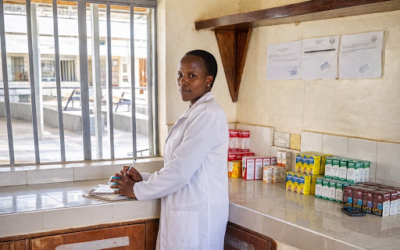
Pharmacies, upon completing the necessary FP training, are authorized to provide short-term FP methods and serve as gateways for clients eligible for long-term methods, referring them to skilled practitioners at specialized health facilities, thereby acting as a critical link in the care chain. This “bi-directional” process is facilitated by a specialized community pharmacy referral tool, ensuring that no client is lost between pharmacies and facilities.
This work is part of a larger MOH strategic framework known as the Total Market Approach (TMA), which coordinates the public, private, and commercial sectors to improve access to contraception. Leading this effort is the Optimizing Pharmacy Channel (OPC) project, a collaboration between inSupply, the Ministry of Health, Division of Reproductive Maternal Newborn Child and Adolescent Health, the Kenya Pharmaceutical Association (KPA), and the Pharmaceutical Society of Kenya (PSK).

The Referral Reality Check
Currently, most pharmacies rely on word-of-mouth or informal phone calls to conduct referrals. While this reflects a high degree of community trust, such methods are nearly impossible to track, verify, or utilize for systematic decision-making.
In several sub-counties across Nakuru, Narok, and Uasin Gishu, for instance, documented formal referral data has, at times, recorded zero activity because the care chain broke at the pharmacy door. Without a formalized link, the system remains blind to the FP client’s journey, leaving both the provider, the health system, and the client in a vacuum of information.
Success in the Field: Voices of Impact
The true potential of this linkage is best expressed by the professionals navigating these systems every day. They see the pharmacy not just as a retail outlet but as a clinical partner and a vital buffer against public-sector stock-outs.
“As a pharmacy provider, formal linkage with CHPs creates a powerful public -private-community partnership that bridges the gap between community-level educational and commercial levels. In this, I see an increased demand and consumption of FP in my pharmacy from the community referrals”. Charles Ondati, Pharmaceutical Technologist, Tracy chemist, Nakuru county.
Beyond increasing demand, this linkage ensures pharmacies act as legitimate service points within the broader health ecosystem.
Emma Kugotha, the Sub-county Reproductive Health Coordinator in Narok County, emphasizes,
“Introduction of pharmacies to community health units (CHUs) was necessary to embrace a public–private sector partnership. The CHPs are tasked with advocating for family planning (FP) services and referring clients to FP-accredited pharmacies for short-term contraceptive options after sensitization to the OPC project. So far, the key success story has been the strong linkage between the community and the two pharmacies offering quality FP services.”
In her experience, the success of the project lies in the strong relationship between the community and accredited pharmacies, in which CHPs are specifically tasked with advocating for and referring clients to these safe, high-quality options.
Furthermore, as Evans Sumba of the KPA Project Implementing Team points out, “Linkage can be strengthened if the MOH county/Sub-county lead teams enhance CHP engagement to affirm the position of trained pharmacies as a safe choice for short-term FP services. This will not only provide much-needed visibility but also ensure no commodity stockouts in private pharmacies and MOH facilities.”
The Way Forward: Beyond the OPC Project
The way forward requires a commitment to three shifts: moving from verbal agreements to signed Memoranda of Understanding (MOUs), integrating pharmacy data into national health management systems, and ensuring that every accredited pharmacy is formally introduced to its local CHP network and that trained pharmacies are linked to primary health care networks for bidirectional referrals.
By linking pharmacies to the tireless work of CHPs, we are closing a gap in a referral tool at the same time, ensuring the journey toward health is seamless, supported, and successful for women in Kenya.