A profound shift is unfolding within Kenya’s sexual and reproductive health (SRH) landscape. For years, macro-level discussions have focused on expanding access, reducing unmet need, and promoting universal health coverage. Yet, the persistent barriers to youth contraceptive access, judgmental clinic queues, deep-rooted community stigma, and a lack of bodily autonomy have historically stalled progress.
The Delivering Innovations in Self-Care (DISC) project stepped into this gap with a clear conviction: the key to unlocking adolescent and youth sexual and reproductive health (AYSRH) lies not in imposing top-down clinical solutions, but in handing the power directly to young people.
Designed to support women and youth to assume greater power and control over their SRH, DISC integrates self-care into health systems to bring care closer to communities while amplifying consumer voice, choice, and agency. To operationalise this mandate, the project maps its interventions across six critical pillars: Demand Generation, Provider Capacity, Health Systems Strengthening, Data Reporting, Supply Management, and Health System Integration.
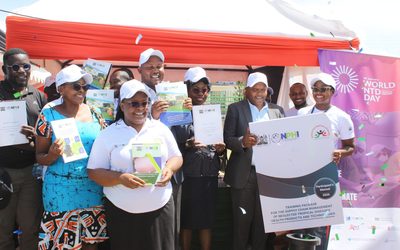
Under the Demand Generation pillar, DISC launched the Youth Champions initiative, a targeted effort specifically designed to reach more young people by meeting them where they are. What began as an organic peer mobilisation initiative has quickly matured into a high-efficiency demand-generation ecosystem.
But beyond the macro-level strategies, the heart of this initiative beats in the everyday spaces where young people live, talk, and look out for one another. This is the story of how peer trust is quietly dismantling decades of reproductive health stigma, told by the young people.
The Faces Behind the Self-Care Movement
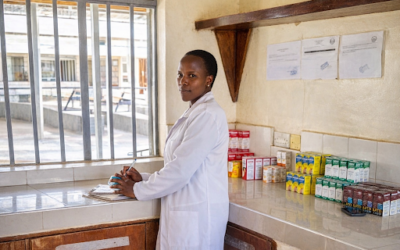
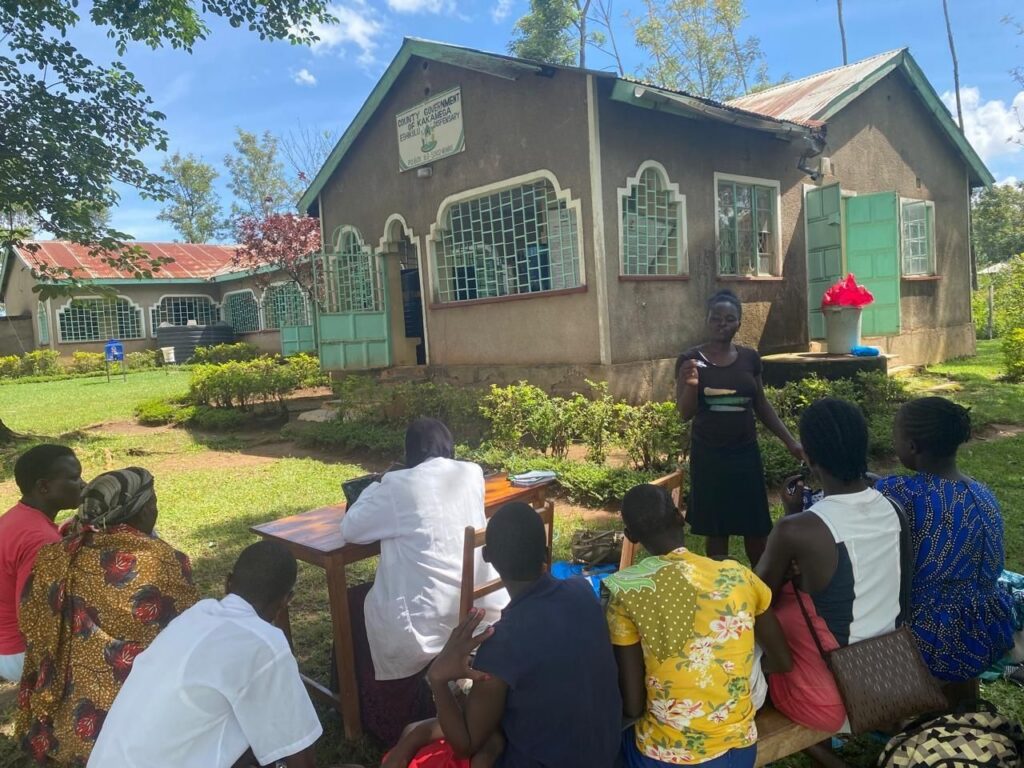
In Kakamega County, Elizabeth Adhiambo Ogola is leading the charge, proving that the most effective health interventions are the ones delivered on the streets. As a Star Champion based at Nabongo Dispensary, Elizabeth isn’t waiting for young women to brave intimidating facilities; she is bringing the health system to them. Her approach is personal and relentless; she is masterfully turning the simple squeeze-and-click steps of DMPA-SC self-injection into a symbol of true autonomy. She ensures young women understand their full spectrum of contraceptive options, helping them find the right fit for their lives, including introducing many to the privacy and convenience of self-injection. By helping a young woman weigh her contraceptive options and demonstrating how easily she can manage her own health with self-injection, she is slowly dismantling the fear of needles and replacing it with confidence. For many, this is their first introduction to a method that offers control on their own terms. In May alone, her grassroots efforts empowered over 350 young people, transforming what once felt like a daunting clinical obligation into a routine of personal self-care that fits comfortably in their pockets.
In Nakuru County, the narrative is equally powerful, though the battlefield is different. Here, champion Cynthia Chepngeno Koech is fighting a quiet war against the deep-rooted community myths that keep girls from taking control of their reproductive health. When misinformation about infertility and heavy bleeding eclipses medical fact, Cynthia steps in not as a lecturer but as a peer. By demonstrating how easily a young woman can manage her own health by taking power into their own hands by choosing what contraception method fits their lifestyle. Guiding 250 girls through these barriers isn’t just a metric for Cynthia; it’s a form of radical empathy. She offers her peers a liberating escape from the daily anxiety of remembering pills, ushering in a new era where self-injection is viewed not as a clinical burden, but as a liberating lifestyle asset.
Ultimately, these peer-led initiatives are achieving far more than just boosting referral numbers; they are redefining the very concept of self-care. By replacing clinical intimidation with genuine trust, champions like Elizabeth and Cynthia are proving that contraception is no longer a taboo subject, but a vital tool for personal agency. As they rewrite this narrative for thousands of Kenyan youth, these leaders are also experiencing their own metamorphosis, discovering powerful new voices and undeniable self-assurance. They aren’t just participating in the health system; they are revolutionizing it from the ground up, one conversation at a time.
Conquering Fear, One Safe Space at a Time
The challenges these champions face are steep. Momentum is frequently slowed by deeply entrenched myths, such as the belief that contraceptives cause permanent infertility or that missing a period means ‘bad blood’ is accumulating. Furthermore, aichmophobia (the fear of needles) remains a significant barrier to uptake.
Youth Champions bridge this gap by offering comprehensive information on all available methods. They take the time to answer questions about side effects and efficacy, helping young people weigh their options. For those seeking a discreet, private choice, they demystify self-injection, demonstrating how a simple method fits into daily life and replacing fear with confidence.
This is where the unique power of peer-led interaction changes the entire narrative. Rather than delivering just a medical lecture, champions go with the information into their social circles. When a hesitant young person watches a friend easily demonstrate the exact “Mix-Activate -Pinch-Squeeze” (MAPS) mechanism of the Uniject, the fear starts to vanish.
The resulting transformations are profound. A Youth Champion from Nairobi shared the quiet victory of witnessing this exact breakthrough:
“A lady who used to fear self-injection, now she can do it without fear. Watching that transformation is why I do this work.”
This peer trust is creating an environment where young users no longer see contraception as a taboo medical intervention, but as a lifestyle asset. As a peer observer from Nakuru reflected,
“DMPA-SC is good; it saves time and energy. Peers are beginning to see it as self-care, not just as family planning.”
Turning Peer Trust Into a Lasting Reality
The most striking result of this model isn’t just that numbers are growing, but how deeply the efficiency has shifted. Even as the active reporting network was streamlined to 209 champions in May 2026, the total number of youth reached an all-time high of 8,956.
This means that a smaller, hyper-optimized cohort of young leaders achieved a historic average of 42.8 youth per champion in May 2026, more than doubling the program’s baseline efficiency from March. This exponential leap occurred because the youth took complete ownership of the message, sparking an organic word-of-mouth wave in which peers now actively seek out champions based on the recommendations of satisfied friends.
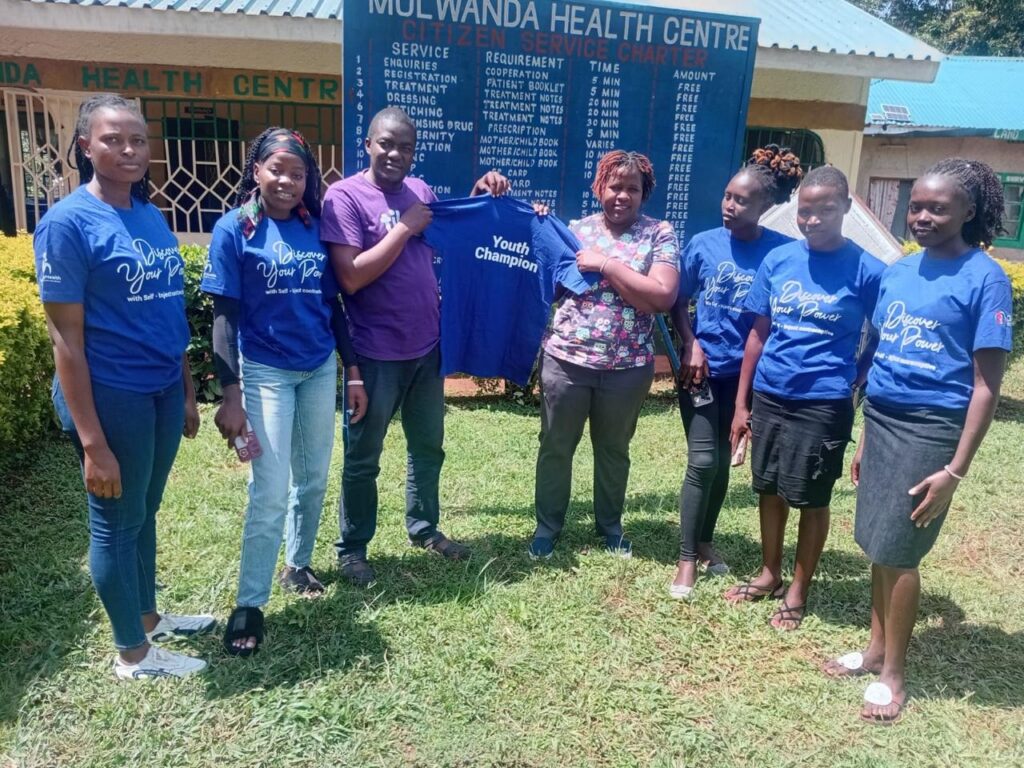
However, increased visibility also brought new challenges. Some youth champions reported being questioned by parents who were concerned that discussions about reproductive health might encourage sexual activity. While difficult, these interactions highlight the sensitivity of the topic and the importance of continued community engagement. In response, and based on advice from the champions, DISC introduced branded Youth Champion t-shirts across Kakamega, Nairobi, and Nakuru to make youth champions more easily identifiable and reinforce their affiliation with the programme. The branding helped youth champions feel more confident in their role and made it easier to explain their purpose to community members.
A Future Guided by Youth Voices
The future for these young people is no longer about being passive targets of public health campaigns; they are actively shaping the system. As the initiative moves forward into its next cycle, the strategy is shifting to directly answer the safety and privacy needs highlighted by the youth themselves.
This includes moving away from manual/paper referral cards toward sleek, youth-friendly digital referral tools, and guiding youth on discreet storage options, such as fashionable carrying pouches, so they can store their 3-month contraceptive supplies completely free from surveillance.
The Youth Champions initiative proves that when you equip young people with accurate information, empathetic tools, and structural support, they become the primary drivers of their own health futures. They are rewriting the self-care narrative in Kenya, one brave, everyday conversation at a time.