Advancing Self-Care in Family Planning: DMPA-SC Self-Injection in Kenya (DISC 2.0)
Building the Foundation for Sustainable Scale
The Delivering Innovation in Self-Care (DISC) project is a multi-country initiative led by PSI, with funding from the Children’s Investment Fund Foundation (CIFF) and the Gates Foundation, to expand equitable access to DMPA-SC self-injection (SI) through stronger health systems, provider capacity strengthening through empathy-based counselling approach, demand generation, and sustainable market development. In Kenya, inSupply Health is implementing DISC in partnership with the Ministry of Health, across Nairobi, Nakuru, and Kakamega counties, while leveraging its broader national work on self-care policy, provider training, supply chain strengthening, and health information systems.
Across the three DISC-supported counties where SI is being actively scaled and routinely monitored, SI uptake has increased rapidly. Between September 2025 and March 2026, self-injection as a proportion of DMPA-SC visits increased from 35% to 66%, while its share of all injectable contraceptive visits rose from 4% to 44%. Through strategic investments in health systems strengthening, provider mentorship, community engagement, and client-centred counselling, DISC 2.0 has demonstrated that self-injection can be successfully introduced and positioned for long-term scale.
Key Results at a Glance (September 2025 to March 2026)
Key Results at a Glance (September 2025 to March 2026)
🩺 476 family planning providers trained in self-injection and commodity management across 400 public facilities.
🧑🤝🧑 270 Community Health Promoters trained, surpassing the original target of 150 and are prepared to support the national scale-up.
🗣️ 329 community dialogue days conducted, reaching 21,506 community members and generating 4,538 referrals.
These investments translated into measurable service delivery gains:
🏥 45,000+ self-injection visits supported across three counties.
👤 18,448 new self-injection users reached between September 2025 and March 2026.
🔄 26,581 repeat visits, demonstrating strong continuation and sustained demand.
Strategic Achievements
Strengthening Human Resources for Scale: The project has invested heavily in building a sustainable training ecosystem. Through a cascaded capacity-building model, 15 Master Trainers and 40 County Trainers were equipped to support national expansion efforts. These trainers subsequently strengthened the skills of 476 facility-based providers, 270 Community Health Assistants, and 340 Youth Champions, creating a strong workforce capable of delivering quality self-injection services.
Advancing Market Maturity: Kenya has achieved several milestones necessary for sustainable SI scale-up, including national policy approval and integration of DMPA-SC into logistics and commodity management systems. To progress further, future investments should focus on expanding active service delivery points, improving commodity visibility, integrating SI indicators into routine health information systems, and strengthening county ownership and financing.
Performance Pulse: Growing Uptake and Integration: Between Q4 2025 and Q1 2026, participating counties recorded increases in both doses dispensed per client and the number of reporting facilities. These gains suggest growing confidence among providers and users, stronger service integration, and increasing acceptance of self-injection as a routine contraceptive option.
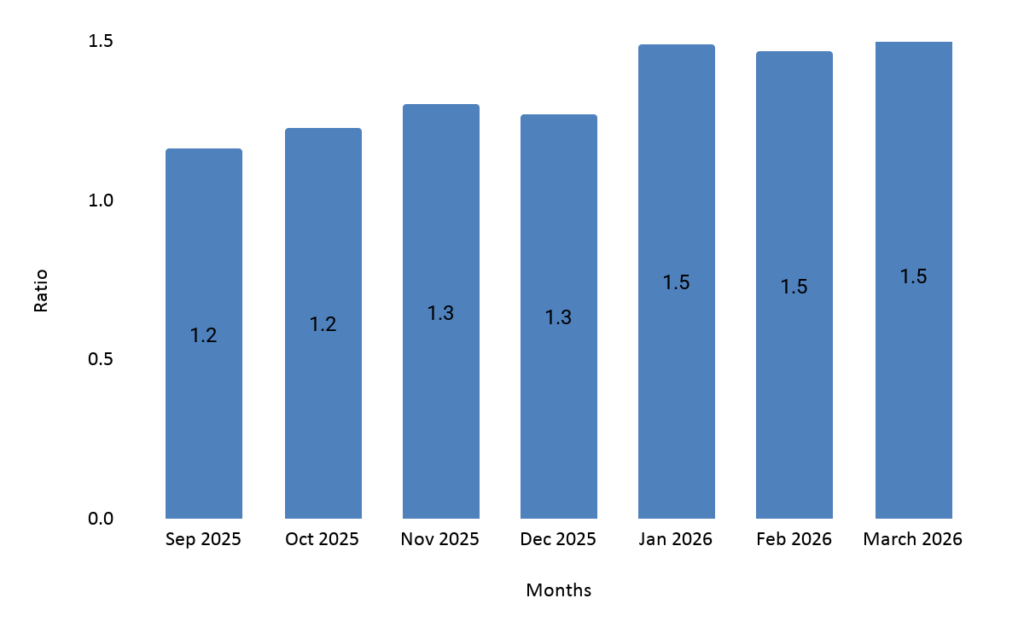
Fig 1: Average dispensation during revisits by month (#Revisit Doses/#Revisits)
Increasing Adoption of Self-Injection: Between September 2025 and March 2026, DISC 2.0 supported 18,449 first-time DMPA-SC/SI visits across the three implementation counties: Kakamega (7,742), Nakuru (6,963), and Nairobi (3,714). The sustained increase in women choosing self-injection demonstrates growing acceptance of self-care as a contraceptive option and increasing confidence among women to self-administer DMPA-SC.
Sustaining Use Through Strong Continuation
A total of 26,581 repeat visits were recorded during the same period: County Repeat Visits, Kakamega 13,136, Nakuru 8,328, and Nairobi 5,117. These trends indicate that women are not only adopting self-injection but are continuing to use it as a preferred long-term contraceptive option.
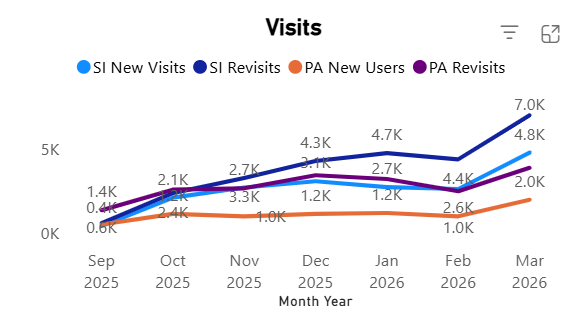
Fig 2: Number of new visits on DMPA-SC/SI vs Number of revisits on DMPA-SC/SI
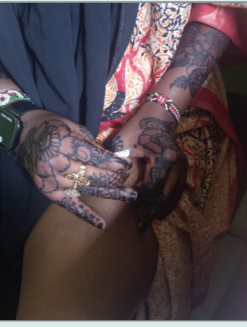
Empowering Choice Through Empathy-Based Counseling: A cornerstone of DISC 2.0 has been the implementation of an Empathy-Based Counseling (EBC) model. Through a cascaded training approach, providers gained the skills to deliver respectful, client-centered counseling and practical self-injection education.
The model has strengthened both technical competence and client confidence, enabling more women to self-inject and successfully continue their chosen method.
Voices from the Field
“After training on self-injection, most of them confidently administered their own doses during the session. That moment, when they stopped being afraid and just did it, that’s the win.” Peer Champion, Nakuru
“DMPA-SC is very convenient; it saves time and energy. Peers are starting to see it not just as family planning, but as self-care that fits their lives.” Peer Champion, Nakuru
“Peers are starting to view DMPA-SC not just as a health choice, but as a productivity tool that respects their time. ”Peer Champion, Nairobi
These perspectives reflect an important shift in how women perceive self-injection—not simply as a contraceptive method, but as a practical self-care solution that offers autonomy, convenience, and control.
Driving Demand Through Community Engagement
Community engagement has played a central role in normalizing self-injection as one of the family planning options available to women and supporting informed contraceptive choice, and connecting women to services. Through 329 community dialogue sessions, the project reached more than 21,500 community members and generated over 4,500 referrals for family planning services.
Demand generation activities were designed to address common questions, misconceptions, and barriers associated with self-injection while reinforcing the importance of voluntary, informed decision-making. Delivered within the MoH’s broader family planning programme, these interventions ensure that women received balanced information on the full range of contraceptive methods, with the choice of whether and which method to use remaining entirely with the client.
Targeted in-reach activities conducted in March 2026 demonstrated strong conversion rates to self-injection: Nakuru: 75%, Kakamega: 68%, and Nairobi: 57%. These results reinforce the value of combining community engagement, quality counseling, and accessible services to drive informed contraceptive choice.
The Road Ahead: Transitioning to Early Growth
The project has established a strong foundation for self-injection scale-up in Kenya. To accelerate the transition from market introduction to early growth, future efforts must prioritise institutionalising self-injection within routine health systems. This involves integrating self-injection indicators into the Health Management Information System (HMIS) and routine reporting platforms to ensure data-driven decision-making. Simultaneously, strengthening commodity visibility and supply chain management is essential to prevent stockouts, while institutionalizing provider mentorship and supportive supervision mechanisms will maintain high standards of care as the practice scales.
Expansion of access and service coverage to reach a broader population of women should be prioritised. Achieving this requires increasing the number of active service delivery points offering self-injection and continuing to build provider competency. By extending geographic coverage beyond current high-performing counties, the health system can ensure that self-care options are accessible to women regardless of their location, effectively normalizing self-injection as a standard component of family planning services.
Furthermore, the road ahead requires advancing client-centered policies that promote reproductive autonomy. Future policy advocacy should focus on supporting more flexible take-home dosing protocols, allowing women to manage their contraceptive needs with fewer facility visits. Increasing dispensation quantities in alignment with client preferences and readiness will further empower users, ensuring that the health system remains responsive to the unique needs and life contexts of the women it serves.
Finally, sustaining these gains depends on strengthening county ownership and financing. It is critical to integrate self-injection into county planning and budgeting processes to ensure dedicated resources for implementation and oversight. By positioning self-injection as a routine and sustainable priority within county health agendas, Kenya can secure the local leadership and financial commitments necessary for long-term market maturity and lasting impact on women’s health.
Looking Forward
The project has demonstrated that self-injection can successfully expand contraceptive choice while empowering women to take greater control of their reproductive health. With more than 45,000 self-injection visits achieved, strong continuation rates, increasing facility participation, and growing community acceptance, Kenya is well-positioned to transition from market introduction to early growth.
Perhaps most importantly, women are increasingly viewing DMPA-SC self-injection not only as a family planning method but as a self-care innovation that saves time, supports productivity, and fits seamlessly into everyday life. This evolving perception provides a powerful foundation for sustained demand, greater reproductive autonomy, and long-term market growth.
Call to Action
Kenya has established the policy, system, and community foundations needed to scale self-injection nationwide. The opportunity now is to build on this momentum and accelerate the transition from introduction to sustained growth.
National and county governments, development partners, donors, implementing organizations, and private-sector stakeholders need to invest in the next phase of scale-up by strengthening routine health systems integration, expanding access to underserved populations, improving commodity security, and increasing domestic financing for self-care interventions.
With continued commitment and strategic investment, injectable contraceptives can become a cornerstone of Kenya’s self-care agenda, expanding contraceptive choice, improving health system efficiency, and enabling more women to manage their reproductive health on their own terms while achieving the 2030 FP strategy.